athmyr - Mia Bickerton
  • Illustration
  • About
  • ILLU6050
  • Illustration
  • About
  • ILLU6050

History & Practice Session III: The Fin de Siècle

19/10/2020

0 Comments

 
Art Nouveau
Initially developing from the Arts and Crafts movement in the 1880s, Art Nouveau rejected the traditional Victorian style in order to create something new. The designs became more organic as artists took inspiration from nature and geometry, being widely used in interior design, architecture, graphic art, furniture, textiles, glass art, ceramics, jewellery, and metal work. This movement spread across many countries throughout Europe, with different variations being formed in each city.
​Glasgow
Picture
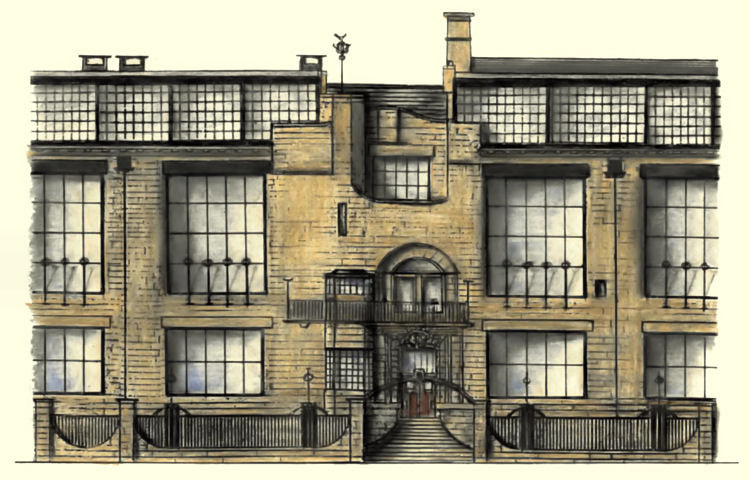
Charles Rennie Mackintosh, Glasgow School of Art, 1896
Lead by the Glasgow Four: Charles Rennie Mackintosh, Margaret Macdonald, Frances Macdonald and Herbert McNair, they founded the later Art Nouveau style with a more geometric influence over a range of mediums inspired by Scottish baronial architecture and Japanese design.
​
Mackintosh began displaying his designs at international exhibitions in London, Turin, and Vienna in 1895. These designs then went on to influence the Secession Style in Vienna.
​Vienna
Picture
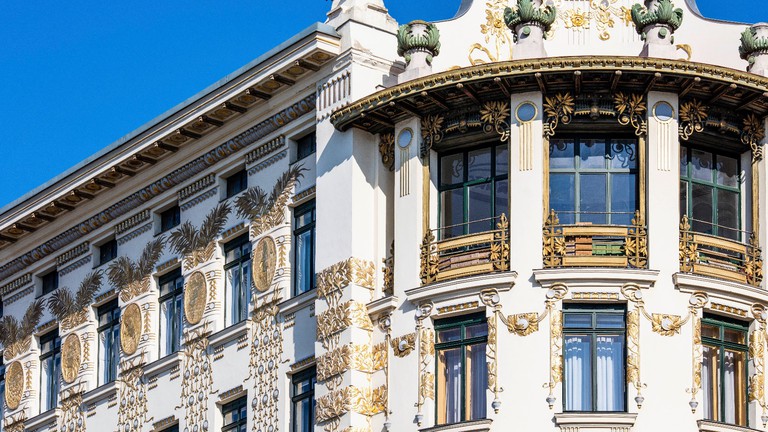
Otto Wagner, The Linke Wienzeile Buildings, 1898-99
Vienna became the centre of a distinct variation of Art Nouveau mainly inspired by geometry known as the Vienna Secession with the movement taking its name from the Munich Secession, a selection of artists that broke away from the mainstream Munich Artists' Association in 1892. The Vienna Secession was founded in 1897 by a large group of artists, with Gustav Klimt becoming the president of the group. They opposed the conservative direction to historicism expressed by the official union of artists, Vienna Künstlerhaus. The Secession went on to found a magazine to promote their work called Ver Sacrum.
​Madrid
Picture
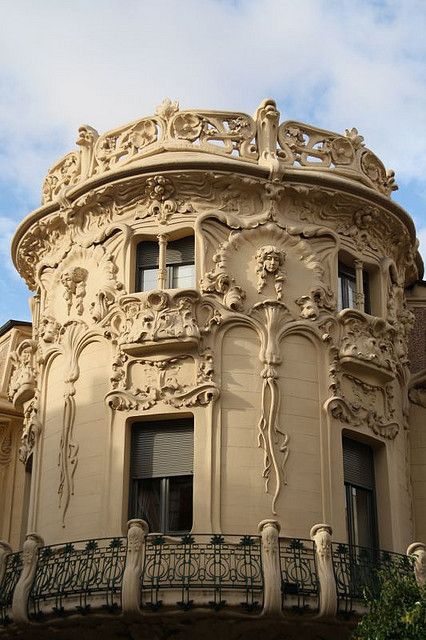
José Grases Riera, Longoria Palace, 1902
Modernismo, the Spanish expression of Art Nouveau, was introduced in Madrid in the early 20th century. Longoria Palace together with the House of Gallardo are Madrid's most notable examples of modernist architecture.

​The design of the palace took inspiration from smooth organic and vegetable forms, interlinking with decorative elements that cover the outside of the building. Some other notable features that convey the Art Nouveau influence would be the incredible iron and glass dome atop the building and the imperial staircase that has a circular outline.
​
​Nancy
Picture
Émile André, Entrance of the Huot house, 1903
​École de Nancy was a Art Nouveau group of artists and designers working in Nancy France from 1890 to 1914 dedicated to upsetting the hierarchy that placed sculpture and painting above decorative arts. The groups work was mainly inspired by nature, consisting of floral forms found in their area. Émile Gallé served as the groups president until his death, being most famous for his incredible glass work and being the driving force behind the Art Nouveau movement.
​
While the Art Nouveau style began to fade across the major European cities, it dominated Nancy's architecture for an additional decade.
0 Comments


Leave a Reply.

    Mia Bickerton

    Illustrator

    Archives

    December 2020
    November 2020
    October 2020

    Categories

    All
    History & Practice

    RSS Feed

Site powered by Weebly. Managed by 34SP.com